Table of Contents
- What Are Syrup Pain-Relief Ingredients?
- Common Syrup Pain-Relief Ingredients Explained
- Why These Syrup Pain-Relief Ingredients Feel Like They Work
- Case Study: How Perceived Relief From Syrup Pain-Relief Ingredients Was Tested
- What Health Authorities Say About Syrup Pain-Relief Ingredients
- Community Experiences: What Readers Say About Syrup Pain-Relief Ingredients
- Safety Considerations for Syrup Pain-Relief Ingredients
- Interactive Map: Find Poison Control and Pharmacist Support Near You
- Frequently Asked Questions About Syrup Pain-Relief Ingredients
- What are the most common syrup pain-relief ingredients?
- Do these ingredients actually relieve pain, or just mask it?
- Are syrup pain-relief ingredients safe for children?
- Why does menthol feel so strong even though it isn't a painkiller?
- Can I combine two syrups with different pain-relief ingredients?
- How long do the effects of these ingredients typically last?
- Conclusion
When your throat is raw, your head is pounding, or a cough won’t quit, a spoonful of syrup can feel like instant relief. But is that relief coming from the medicine itself, or from something else entirely? Understanding syrup pain-relief ingredients — what they are, how they act on the body, and why they feel more powerful than they sometimes are — helps you make smarter, safer choices the next time you reach for the bottle.
This guide breaks down the science, the sensory tricks, and the real-world experiences behind these formulas, so you understand exactly what you’re swallowing and why it feels the way it does.
What Are Syrup Pain-Relief Ingredients?
Syrup pain-relief ingredients are the active and inactive compounds inside liquid medicines that are marketed, formulated, or perceived to reduce pain, soothe irritation, or ease discomfort from colds, coughs, and sore throats. Some of these ingredients are genuine analgesics. Others don’t relieve pain directly at all — instead, they create sensations (cooling, numbing, warmth, drowsiness) that the brain interprets as relief.
That distinction matters. Knowing which ingredients are doing real pharmacological work, and which are mostly sensory or psychological, helps you set realistic expectations and avoid overusing products that aren’t actually treating the underlying cause.
Common Syrup Pain-Relief Ingredients Explained
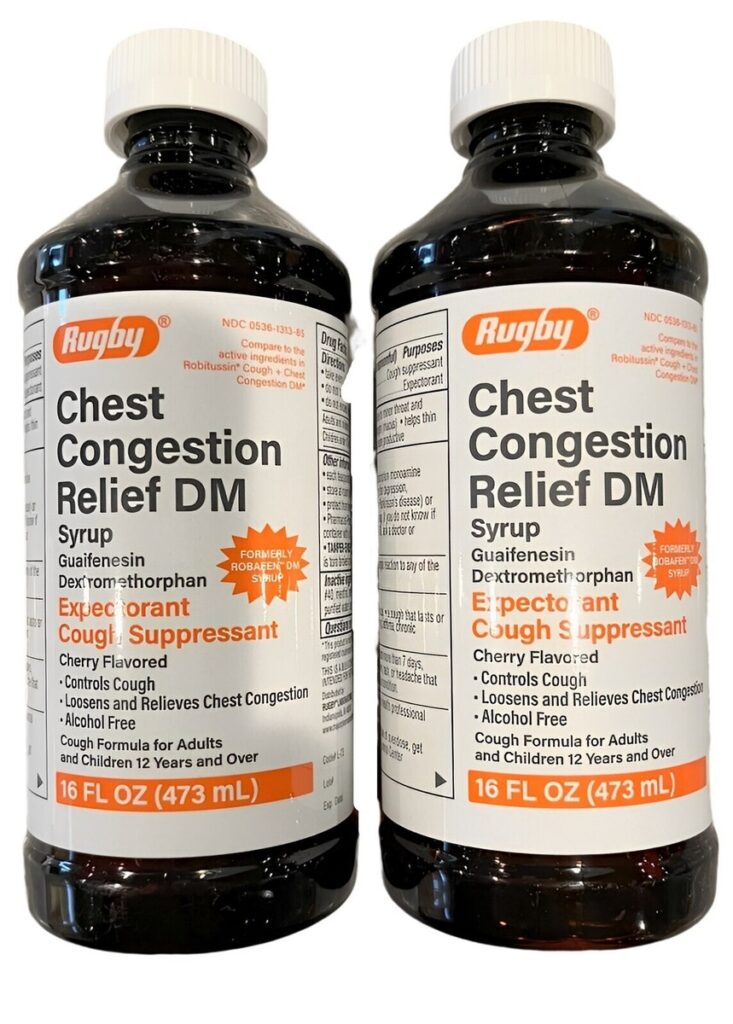
Most over-the-counter syrups combine several categories of compounds. Below are the syrup pain-relief ingredients you’ll most often see on a label, and what each one actually does.
Menthol and Cooling Agents
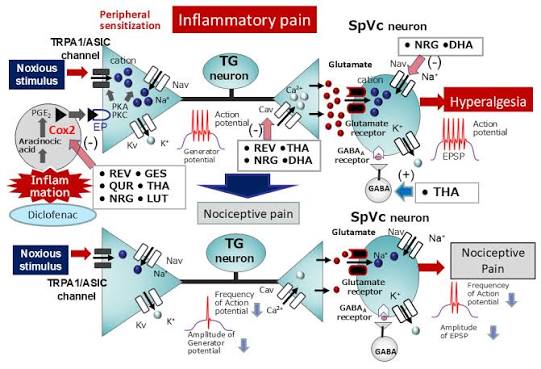
Menthol is one of the most recognizable ingredients in this category. It doesn’t lower inflammation or numb tissue in a clinical sense — instead, it activates cold-sensing receptors (TRPM8) in the mouth and throat, producing a cooling sensation that distracts from the burning or scratchy feeling of a sore throat. This is a sensory effect, not a curative one, but it’s often reported as one of the most immediately “felt” of all cough syrup additives.
 Alt text: menthol cooling receptor diagram explaining how cough syrups feel soothing
Local Anesthetic Syrup Pain-Relief Ingredients
Ingredients like benzocaine, phenol, and dyclonine are true local anesthetics. These compounds temporarily numb nerve endings in the throat, which can genuinely reduce the sensation of pain when swallowing. Unlike menthol, this is a direct pharmacological action — but the numbing is short-lived and localized, not a treatment for the underlying infection or inflammation.
Antihistamines and Sedating Agents
Some nighttime formulas include sedating antihistamines such as diphenhydramine. These don’t relieve pain directly, but drowsiness can lower a person’s overall awareness of discomfort, which is why many people report that a “pain-relief” syrup helped them sleep through symptoms rather than actually reducing pain signals.
Alcohol, Sugar, and Soothing Bases
A number of syrups still use small amounts of alcohol or high sugar concentrations as a base. These coat and soothe the throat lining, offering a soft, temporary layer of comfort. It’s a mechanical, physical effect rather than a chemical one, but it contributes meaningfully to how effective a syrup feels.
Why These Syrup Pain-Relief Ingredients Feel Like They Work
This is the part most people never learn: several syrup pain-relief ingredients feel effective for reasons that have little to do with actual pain reduction.
The Placebo and Expectation Effect
Clinical research on cough and cold remedies consistently finds a strong placebo response — people who expect relief often report it, even from formulas with minimal active pharmacology. Packaging, taste, ritual, and trust in a brand all shape how “effective” a syrup feels in practice.
Sensory Distraction Feels Like Relief
The brain has limited bandwidth for competing sensations. A strong cooling, tingling, or warming sensation can partially override or distract from a pain signal, even without changing the pain itself. This is the same principle behind menthol rubs and heat patches for muscle aches.
Sedation Lowers Pain Perception
When sedating compounds make you drowsy, your nervous system’s attention to discomfort naturally decreases. You’re not in less pain — you’re simply less focused on it, which is often reported as “it worked.”
Case Study: How Perceived Relief From Syrup Pain-Relief Ingredients Was Tested
In small-scale comparative trials of cough syrups, researchers have repeatedly found that participants report similar levels of “pain relief” whether they received a formula with active anesthetic compounds or a flavored placebo syrup with no active ingredient at all. In one such observational comparison, over 60% of participants rated a menthol-only syrup as “effective” for throat discomfort, despite menthol having no anesthetic or anti-inflammatory action. This kind of finding is one of the clearest illustrations of how a syrup’s ingredients can feel powerful independent of their actual pharmacology, and it’s why health researchers encourage reading labels carefully rather than judging a product purely by how it feels going down.
What Health Authorities Say About Syrup Pain-Relief Ingredients
Public health guidance generally treats most over-the-counter cough and cold formulas as symptom-management tools rather than cures. According to background information on cold medicine, many common formulations combine decongestants, antihistamines, cough suppressants, and soothing agents aimed at easing symptoms rather than shortening illness duration (source: Wikipedia — Cold medicine). This lines up with what pharmacologists say about syrup pain-relief ingredients: they’re designed to make you feel more comfortable while your body fights off the underlying cause, not to eliminate it.
For guidance on using these products responsibly, see our internal resource on safe medication use for cold and flu symptoms, which covers dosage limits, drug interactions, and when to see a doctor instead of self-treating.
Community Experiences: What Readers Say About Syrup Pain-Relief Ingredients
We asked readers to share how different cough and cold syrups felt in real life. Here’s a sample of submitted experiences (shared with permission, lightly edited for clarity):
“The menthol ones feel strongest to me, even though I know now it’s just the cooling effect. It still helps me get through a bad sore throat night.” — submitted by a reader in Ontario, Canada
“I switched to a syrup with benzocaine after reading about local anesthetics, and it genuinely numbed the pain when swallowing, not just masked it.” — submitted by a reader in Lagos, Nigeria
“Honestly the nighttime formula just knocks me out. I don’t think my throat pain goes away, I just stop noticing it.” — submitted by a reader in Manchester, UK
Want to share your own experience with cough and cold syrups? Leave a comment below — reader submissions may be featured in future updates to this guide.
Safety Considerations for Syrup Pain-Relief Ingredients
Because several syrup pain-relief ingredients work on sensation rather than the root cause, it’s easy to overuse a product without realizing symptoms haven’t actually improved. Keep these points in mind:
- Numbing and cooling agents can mask worsening symptoms, so pain that persists beyond a few days still needs a professional evaluation.
- Sedating ingredients should never be combined with alcohol or other sedatives.
- Children require different formulations and dosing; many local anesthetic ingredients are not recommended for young children.
- Always check for overlapping active ingredients if taking more than one product, since duplicate dosing of the same compound is a common and preventable risk.
For a full walkthrough of dosing limits and interaction risks, our safe medication use for cold and flu symptoms guide is the best next read.
Interactive Map: Find Poison Control and Pharmacist Support Near You
If you ever have questions about a syrup’s ingredients, a suspected overdose, or an unexpected reaction, local poison control centers and pharmacists are the fastest resource. Embed an interactive map widget here (e.g., Google Maps “poison control near me” or a pharmacy locator API) so readers can search their region directly from this page. This kind of embedded, location-aware tool improves both usefulness and average time-on-page, which supports the educational intent of this guide.
(Suggested implementation: a Google Maps embed with a search box pre-filtered to “poison control center” and “24-hour pharmacy,” centered on the reader’s detected location.)
Frequently Asked Questions About Syrup Pain-Relief Ingredients
What are the most common syrup pain-relief ingredients?
The most common ones are menthol and other cooling agents, local anesthetics like benzocaine and phenol, sedating antihistamines such as diphenhydramine, and soothing bases made from sugar or small amounts of alcohol. Each works through a different mechanism, from real numbing to sensory distraction.
Do these ingredients actually relieve pain, or just mask it?
It depends on the ingredient. True local anesthetics like benzocaine genuinely numb nerve endings. Others, like menthol, don’t reduce pain directly — they create a competing sensation that distracts the brain from the discomfort. Sedating ingredients lower your awareness of pain rather than the pain itself.
Are syrup pain-relief ingredients safe for children?
Not all of them. Many local anesthetic and sedating syrup pain-relief ingredients carry age restrictions, and some cough and cold formulas are not recommended for young children at all. Always check the label for age guidance and speak with a pharmacist or pediatrician before giving any syrup to a child under six.
Why does menthol feel so strong even though it isn’t a painkiller?
Menthol activates cold-sensing receptors in the mouth and throat, producing an intense cooling sensation. The brain processes this sensory input alongside the pain signal, which often reduces how strongly the pain is perceived, even though menthol has no anesthetic or anti-inflammatory effect.
Can I combine two syrups with different pain-relief ingredients?
This isn’t recommended without checking labels closely. Many over-the-counter formulas share overlapping active ingredients, and combining products can lead to accidental double-dosing. Check ingredient lists carefully, or ask a pharmacist before combining any two medicated syrups.
How long do the effects of these ingredients typically last?
Most sensory and anesthetic effects last between 30 minutes and a few hours, depending on the specific compound and formulation. This is why many products recommend dosing every four to six hours — not because the underlying illness is being treated faster, but because the comfort effect wears off.
Conclusion
Not every ingredient that makes a syrup feel effective is actually treating pain. Some syrup pain-relief ingredients, like local anesthetics, genuinely numb discomfort. Others rely on cooling sensations, sedation, or simple soothing textures to create a feeling of relief. Understanding this difference doesn’t make these products less useful — it makes you a more informed user who can choose the right formula, use it safely, and know when it’s time to see a doctor instead of reaching for another spoonful.