
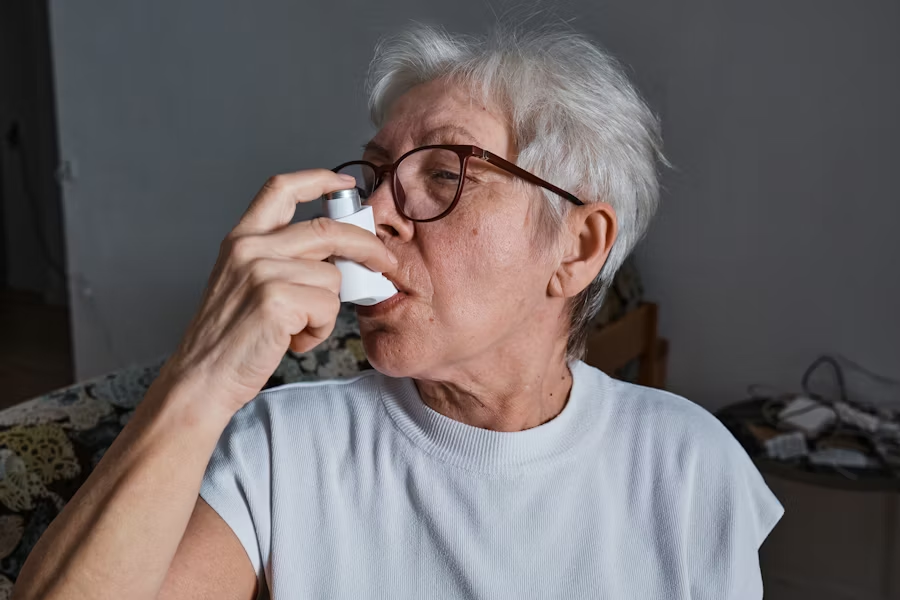
A post viral allergy asthma cough is the umbrella term for three different but easily confused coughs: the lingering cough that hangs on after a cold or flu, the seasonal cough triggered by pollen, dust, or pet dander, and the wheezy cough that signals an asthma flare-up. The fastest way to tell them apart is timing and triggers — a post-viral cough starts after an infection and slowly fades within 8 weeks, an allergy cough comes and goes with exposure to a specific trigger, and an asthma flare cough is usually accompanied by wheezing, chest tightness, and shortness of breath. Below, we break down exactly how to spot the difference and know when it’s time to call a doctor.

This guide is written for general education and awareness. It is not a diagnosis — if your cough is severe, persistent, or paired with breathing difficulty, see a licensed healthcare provider.
What Is a Post Viral Allergy Asthma Cough?
This isn’t a single medical diagnosis — it’s a practical way to group the three most common causes of a cough that won’t go away:
- Post-viral cough – left over after a cold, flu, or COVID-19 infection has cleared.
- Allergy cough – triggered by pollen, mold, dust mites, or pet dander.
- Asthma flare cough – caused by inflamed, narrowed airways, often triggered by the same viruses or allergens above.
Because all three can overlap — a cold can trigger allergies, and allergies can trigger asthma — a post viral allergy asthma cough is genuinely hard to self-diagnose without understanding what separates them.
Post Viral Allergy Asthma Cough Comparison Chart
Here’s a quick side-by-side so you can scan for your own symptoms.
| Feature | Post-Viral Cough | Allergy Cough | Asthma Flare Cough |
|---|---|---|---|
| Onset | 1–3 weeks after a cold/flu | Sudden, tied to exposure | Can be sudden or gradual |
| Duration | Usually resolves in 3–8 weeks | Lasts as long as exposure continues | Recurs in episodes |
| Wheezing | Rare | Rare, unless asthma is also present | Common |
| Chest tightness | Occasional, mild | Uncommon | Common |
| Nasal symptoms | Often lingering congestion | Sneezing, itchy/watery eyes | Variable |
| Nighttime cough | Sometimes | Sometimes (dust mites) | Frequently worse at night |
| Triggers | None — leftover irritation | Pollen, dust, pets, mold | Exercise, cold air, allergens, smoke |
This table is the fastest reference point for anyone trying to sort out which type of cough they have at a glance, but the sections below go deeper into each one.
Post-Viral Cough: The First Type of Post Viral Allergy Asthma Cough
A post-viral cough happens when a respiratory infection leaves the airway lining inflamed and hypersensitive, even after the virus itself is gone. It’s one of the most common of these three cough types and typically shows up as a dry, tickly cough that lingers well past the point where other cold symptoms have disappeared.
What Causes a Post Viral Allergy Asthma Cough After a Cold or Flu?
The airway lining takes time to heal after infection, and in the meantime, it can overreact to ordinary triggers like cold air, talking, or laughing. This kind of lingering, irritation-driven cough after a respiratory infection is well documented and generally resolves on its own as the airway heals. You can read more general background on this pattern via Wikipedia’s overview of postinfectious cough.
For a deeper walkthrough of week-by-week recovery timelines, see our complete guide to post-viral cough recovery.
Allergy Cough vs. Post Viral Allergy Asthma Cough: Key Differences
Allergy coughs are driven by your immune system overreacting to a harmless substance — pollen, dust mites, mold spores, or pet dander. Unlike a post-viral cough, an allergy cough doesn’t fade on its own timeline; it flares up every time you’re near the trigger and calms down once you’re away from it.
How to Spot an Allergy-Driven Post Viral Allergy Asthma Cough
Look for these accompanying clues:
- Itchy, watery eyes
- Frequent sneezing
- Clear (not colored) nasal discharge
- Symptoms that worsen outdoors during pollen season, or indoors around pets and dust
- No fever, body aches, or sore throat (which would point to a viral cause instead)
If your cough started with a cold but the “cold” symptoms never really matched a virus — no fever, no body aches — it may be an allergy cough being mistaken for something viral.

Asthma Flare or Post Viral Allergy Asthma Cough? Warning Signs
Asthma is a chronic condition in which the airways become inflamed, narrow, and produce extra mucus, making breathing harder. Viral infections and allergens are two of the most common asthma triggers, which is exactly why a lingering cough from a cold or allergy season so often gets confused with an asthma flare. For general background on how asthma affects the airways, see Wikipedia’s entry on asthma.
When a Post Viral Allergy Asthma Cough Signals Asthma
Watch for these red flags, which point toward asthma rather than a simple lingering cough:
- Wheezing — a whistling sound when you breathe out
- Chest tightness or a feeling of pressure
- Shortness of breath, especially with exertion
- A cough that gets noticeably worse at night or early morning
- Cough that worsens with exercise or cold air
- A personal or family history of asthma, eczema, or allergies
If you already manage asthma, our guide to recognizing and managing asthma flare-ups covers action-plan basics in more detail.
Post Viral Allergy Asthma Cough Checklist: How to Tell the Difference
Use this quick self-check the next time you’re trying to sort out what’s really behind your cough:
- [ ] Did the cough start during or right after a cold/flu, with no clear allergy trigger? → Likely post-viral
- [ ] Does the cough flare around pollen, dust, pets, or mold and settle when you leave that environment? → Likely allergy
- [ ] Is the cough paired with wheezing, chest tightness, or breathlessness? → Likely asthma-related
- [ ] Has it lasted longer than 8 weeks? → Time to see a doctor, regardless of the cause
- [ ] Does it wake you up at night repeatedly? → Flag this for a medical evaluation
When to See a Doctor for a Post Viral Allergy Asthma Cough
Most lingering coughs resolve on their own, but you should book an appointment if you notice:
- A cough lasting longer than 8 weeks
- Wheezing or whistling when you breathe
- Shortness of breath, even mild, during normal activity
- Coughing up blood or thick discolored mucus
- Fever that returns after initially improving
- Chest pain
- A cough that disrupts sleep several nights a week
A healthcare provider can use a physical exam, breathing tests (like spirometry), or allergy testing to pinpoint whether your cough is truly post-viral, allergic, or an early sign of asthma.
Treating a Post Viral Allergy Asthma Cough at Home and With Medication
Treatment depends on the underlying cause:
For post-viral cough:
- Stay hydrated and use honey (for adults and children over 1 year) to soothe the throat
- Use a humidifier to ease airway irritation
- Avoid smoke and strong irritants while healing
For allergy cough:
- Identify and reduce exposure to triggers
- Antihistamines or nasal corticosteroid sprays, as advised by a pharmacist or doctor
- Regular cleaning to reduce dust mites and pet dander
For asthma-related cough:
- Follow your prescribed asthma action plan
- Use a rescue inhaler as directed
- Track symptoms with a peak flow meter
- Avoid known triggers like smoke, cold air, or strenuous exertion without warm-up
None of this replaces a personalized treatment plan — always confirm dosing and medication choices with a healthcare provider, especially for children, pregnant individuals, or anyone with existing lung conditions.
Reader Experiences: Living With a Post Viral Allergy Asthma Cough
We asked readers to share how they finally figured out what was behind their own lingering cough. A few responses, lightly edited for clarity:
“Mine started after the flu and I assumed it was just a leftover cough. Six weeks in, my doctor found it was mild asthma triggered by the virus. Wish I’d gone in sooner.” — reader comment
“I kept blaming allergies every spring until I noticed I was wheezing at night too. Turned out to be both — allergies and asthma.” — reader comment
“The comparison chart approach helped me realize mine was 100% seasonal allergies, not a leftover cold. No fever, no aches, just constant sneezing.” — reader comment
Have your own experience with a lingering cough like this? Share what helped you figure out the cause in the comments below — your story could help another reader spot the pattern faster.
Post Viral Allergy Asthma Cough FAQs
How long does a post viral allergy asthma cough usually last? A typical post-viral cough resolves within 3 to 8 weeks as the airway lining heals. If a cough tied to allergies or asthma lasts longer than that, or keeps returning, it’s worth a medical evaluation rather than waiting it out.
Can allergies actually trigger an asthma flare? Yes. Allergens like pollen, dust mites, and pet dander are among the most common asthma triggers, which is why allergy symptoms and asthma symptoms so often show up together and get mistaken for one another.
What’s the main difference between a post-viral cough and an asthma cough? A post-viral cough is generally dry, gradually improving, and not linked to wheezing. An asthma-related cough tends to come with wheezing, chest tightness, and shortness of breath, and it can recur in episodes rather than steadily fading.
Is a post viral allergy asthma cough contagious? The post-viral portion may still carry some residual contagiousness if the original infection hasn’t fully cleared, but once the acute infection is over, the lingering cough itself is not contagious. Allergy and asthma coughs are never contagious.
Should I see a doctor for a cough that started after a cold? See a doctor if the cough lasts more than 8 weeks, comes with wheezing or breathlessness, disrupts sleep, or is accompanied by fever, chest pain, or coughing up blood or discolored mucus.
Can children have this type of lingering cough too? Yes, children commonly develop a lingering cough after colds, and they can also have allergy- or asthma-related coughs. Because children’s airways are smaller and more reactive, it’s especially important to have a pediatrician evaluate a cough that persists or includes wheezing.
What tests help diagnose the cause of a lingering cough? Doctors may use a physical exam, spirometry (a breathing test), a chest X-ray, or allergy skin/blood testing to determine whether a cough is post-viral, allergic, or asthma-related.
Sources for further reading: